Our Fictional Course
Bernard’s Park Golf Club – Life on the Back Nine’s very own fictional course

A potted history of Bernard’s Park
Set among mature woodland, open parkland and the grounds of the historic Bernard estate, Bernard’s Park Golf Club is a course with a character all of its own.
The story of the estate is closely associated with the St Bernard dog from which the club takes its name. For generations, the grounds were home to the family, whose affection for the breed became part of the identity of the estate. St Bernards were kept here as companion and working dogs, and stories of them accompanying family members and guests around the grounds became part of local folklore.
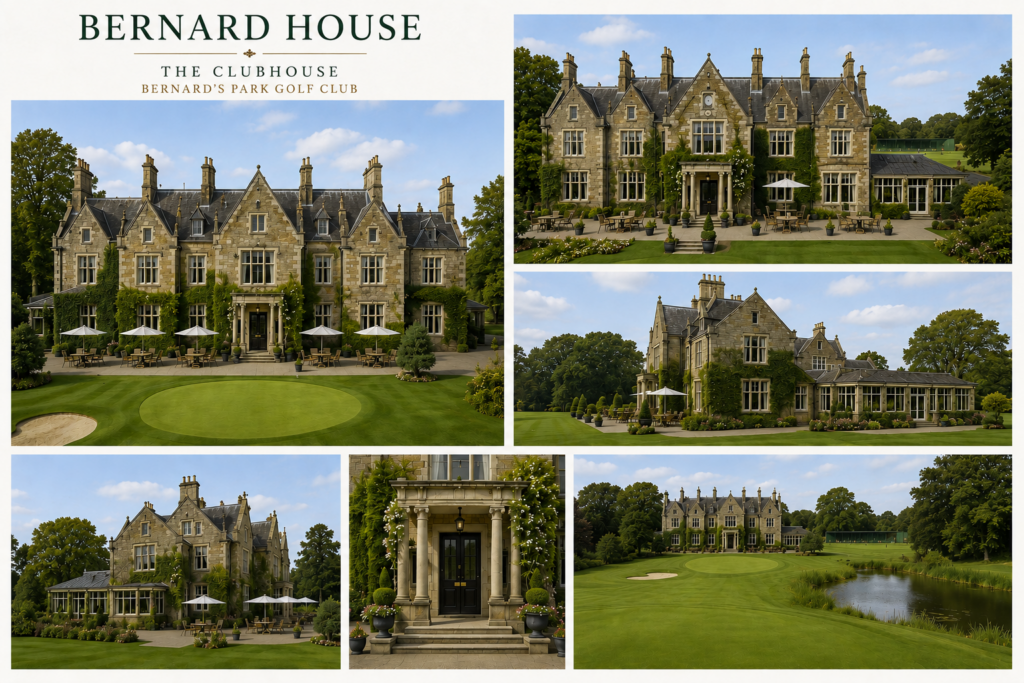
At the heart of the estate stands Bernard House, an imposing country house that has been carefully preserved and adapted as the clubhouse. Rather than being a building constructed for the golf club, Bernard House was once the centre of the original estate, giving the club a genuine connection with the land on which it now sits.
The golf club itself was established in 1968, when part of the historic estate was transformed into an 18 hole golf course. The designers worked with the existing landscape wherever possible, retaining mature woodland, established trees, natural contours and water features. The result is a course that feels as though it belongs to the landscape rather than having simply been placed upon it.
Today, Bernard’s Park retains that sense of history. The course combines the openness and mature character of a traditional parkland course with the intimacy and woodland corridors of its estate setting — a natural hybrid of parkland and woodland golf. It is a members club, however the club welcomes visitors and also operates a points based membership scheme for the golfer who values flexibility as part of their life balance.
The clubhouse remains central to the experience. From the terrace, golfers can look across the finishing hole towards the 18th green, while the practice facilities sit discreetly behind Bernard House.
And somewhere around the club, there is always another Bernard to be found.
The St Bernard has become the unofficial character of the club, and visitors are invited to take part in the club’s “Find Bernard” tradition — with the dog hidden somewhere in each edition of Life on the Back Nine Magazine
Bernard’s Park – The Back Nine – Hole by Hole
The hole
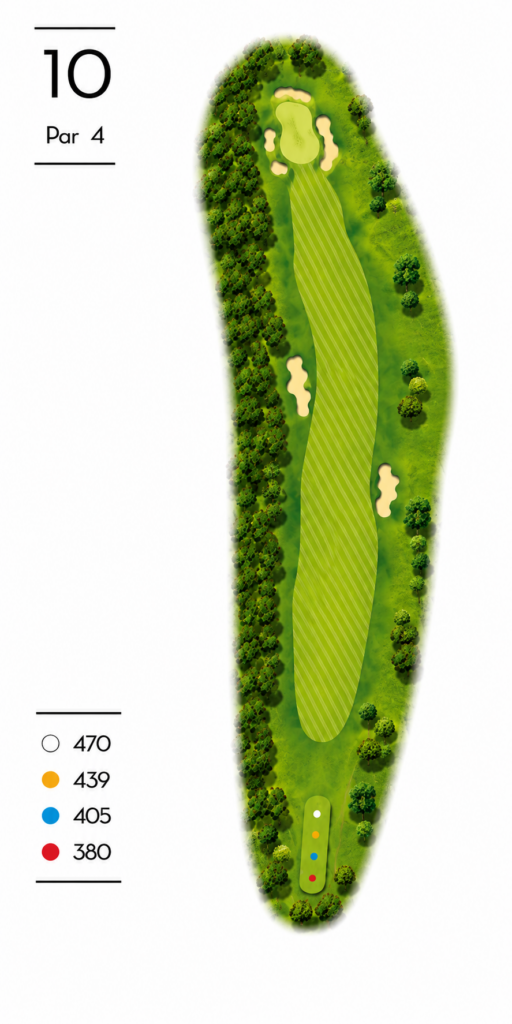
A long, handsome par 4 that rewards a steady start. The fairway is generous but framed closely by mature woodland on the left, while trees and strategically positioned bunkers narrow the approach as you get closer to the green.
The fairway runs predominantly straight before the hole gently gathers towards the green. The putting surface is well protected by several bunkers, making the approach shot the real test.
How to play it
For the mature golfer, this is a hole where position is more important than distance.
A controlled drive towards the centre of the fairway gives the best opportunity to attack the green. There is little benefit in trying to squeeze every last yard from the tee if doing so brings the surrounding trees into play.
For those playing from the shorter tees, a sensible tee shot followed by a controlled approach is often the percentage play. Take enough club to reach the green comfortably rather than trying to force the shot.
Around the green, the bunkers reward a little caution. Missing short or slightly wide can often leave a simpler recovery than taking on the more heavily protected areas.
Look out for…
Hole 10 is particularly representative of Bernard’s Park’s character. The mature woodland provides a habitat for woodpeckers, squirrels and a variety of woodland birds, and in quieter moments you may see deer moving through the trees.
There is something very peaceful about this part of the course — listen carefully between shots and the woodland often provides as much interest as the golf.
The hole
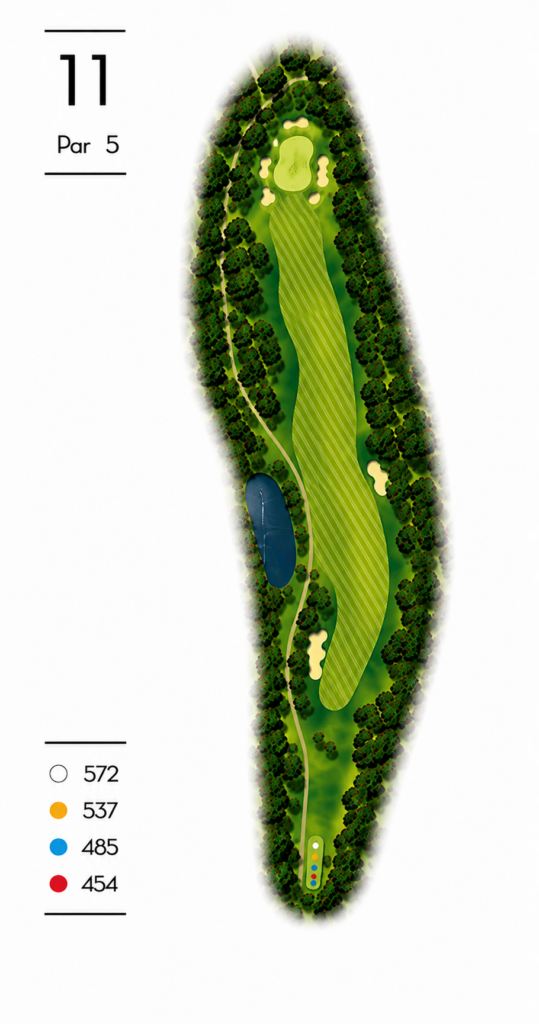
A classic three-shot par 5 through a beautiful corridor of mature woodland.
The fairway is generous but the hole gradually becomes more demanding as it approaches the green. A small lake sits to the left of the fairway in the middle section, while bunkers appear at various points along the hole.
The green itself is surrounded by several bunkers and sits in a more enclosed woodland setting.
How to play it
This is a hole where patience pays.
The temptation is to attack from the tee, but a mature golfer will often get more enjoyment — and a better score — by treating it as three manageable shots and using your handicap.
A solid drive into the fairway sets up the second shot. From there, consider whether the lake and surrounding trees make a long second shot worthwhile. If not, lay up to a comfortable distance and leave a straightforward approach.
The final approach should be treated with respect. There are several bunkers around the green, so favour the safest portion of the putting surface rather than chasing a tucked pin.
Look out for…
The lake provides a particularly attractive wildlife spot. Keep an eye out for waterfowl, dragonflies and frogs, while the woodland canopy is home to numerous smaller bird species.
It is also one of those holes where the changing light through the trees makes the landscape look different depending on the time of day.